-
 info@sherpabackpackers.com
 -


 +977-9841284785
Our itinerary gives you the combined adventure Lobuche East (6119m) with Everest Base Camp trek. Mt. Lobuche climb is certainly a bit more challenging than another popular climb to Island Peak. However, the magnificently panoramic views from the Lobuche summit prove the attempt worth undertaking. Not only the gorgeous Mt. Everest, you will also be able to see many mountains of the Rongbuk side of the Tibet. At first we trek to Everest Base Camp which not only gives you a chance to spend some time of your life among the high mountains, but also prepares our bodies to acclimatize, so that our bodies will easily adapt to the atmosphere while climbing Lobuche. The bliss you will experience after scaling the Lobuche Peak will certainly remain with you forever. And don’t forget the speed shoot – taking photos by, among others, Everest, Lhotse, Nuptse, Pumori, Lobuche and with your friends!
The journey begins with a mountain flight to the Tenzing-Hillary Airport at Lukla of the National Geographic fame. The trek starts from Lukla up through the Sagarmatha National Park all the way through the colorful landscapes. As we take steep ascent to Namche Bazaar, the capital of Sherpas, we are greeted by spectacular mountain vistas. We continue to follow the trail to a famous vantage point, Kala Patthar, where a marvelous 360-degree panorama awaits. Mt. Kala Patthar, as the name suggests, is a “black rock” among the eternal whiteness around in the embrace Everest, Lhotse, Nuptse, Pumori, and many more. From Everest Base Camp, we trek down to Lobuche and head toward the Lobuche Base Camp. After summiting the Lobuche East we retrace our steps to Lukla again for a return flight to Kathmandu.
DAY 1: Kathmandu (1300m)
DAY 2: Kathmandu – Lukla (2,860m) 30 minutes flight – Phakding (2,690m) 3 hours
DAY 3: Phakding – Namche Bazaar (3,440 m): 6- 7 hours
DAY 4: Namche Bazaar: Acclimatization Day
DAY 5: Namche Bazzar to Phortse (3,860m) 8 hours
DAY 6: Phortse to Dingboche (4,360 m) 8 hours
DAY 7 : Dingboche (4,360 m): Acclimatization Day
DAY 8: Dingboche – Lobuche (4930m) 6 hours
DAY 9: Lobuche – Gorak Shep (5180m) 4hours Everest Base Camp (5365m) 3 hours – Gorak Shep: 2 hours
DAY 10: Gorak Shep – Kala Patthar – Lobuche (4900m) 7 Hours
DAY 11: Lobche – Lonuche high camp (5400m) 5Hours
DAY 12: Summit Lobuche East (6119m) and back to Pheriche 10-12 hours
DAY 13: Pheriche to Namche 8 Hours
DAY 14: Namche Bazaar-Lukla
DAY 15: Fly Back to Kathmandu
DAY 16: Final Departure
DAY 1: Kathmandu (1300m)
Upon your arrival in the Kathmandu airport look for your guide with Sherpa Backpackers’ display board at the arrival gate. You will be then transferred to the hotel. After you check in you have sometime to explore the city and then preparing for your next day adventure is must. Your guide will introduce you to rest of the team member and brief you about the trip in the evening. Provided there is time after the meeting we may as well go out for a group dinner to a traditional Nepali Restaurant.
DAY 2: Kathmandu – Lukla (2,860m) 30 minutes flight – Phakding (2,690m) 3 hours
After an early breakfast, you will be driven to the domestic terminal of Kathmandu Airport for an early morning flight to Lukla, also known as the gateway to Mt. Everest Base Camp. After an adventurous 30 minute flight above the breathtaking green and white mountains we reach the Tenzing-Hillary Airport at Lukla. This is one of the most beautiful air routes in the world which is surrounded by high mountains peaks. Upon arrival at Lukla, we meet our other crew members and the you get access to your duffel bags before we start the day hike. After some packing and arrangements, we start our trek through the prosperous village of Lukla until we reach Phakding. To assist in acclimatization, we only have a short hike today. However, if interested in additional activities we can take a side trip upto a nearbyvilleg or visit a Buddhist monastery. Overnight in Phakding.
DAY 3: Phakding – Namche Bazaar (3,440 m): 6- 7 hours
Today’s our trek starts in the morning after breakfast. The walk today is pleasant with few short uphill and downhill with multiple crossings over Dudh Koshi River and magnificent view of Mt. Thamserku from the Benkar village. We cross more bridges and reach entrance of Sagarmatha National Park at Monjo where we will have our lunch. After lunch we descend and then a gradual walk brings us to Jorsale, the last village before Namche Bazaar.It’s mostly ascending after this. As we climb up the hill towards Namche Bazzar closer and magnificent sight of Kongde Peak, Kusum Kangaru, Tawache, and many other fabulous mountains can be seen close by. If the weather is good then today you will also be able to see Mt. Everest for the first time. We stop at Chautara to admire the view. Then we make the last push to get to Namche.
DAY 4: Namche Bazaar: Acclimatization Day
This is the scheduled ‘acclimatization’ day for the trek. Experts always recommend us to stay active and moving during the rest day too instead of being idle. Therefore today we take you for an acclimatization hike making an ascent of 300-40meters. Then back for lunch again. After lunch you have an afternoon free to explore Namche Bazaar.
DAY 5: Namche Bazzar to Phortse (3,810m) 8 hours
After breakfast in Namche, we start our trek towards Kyangjuma enjoying superb view of Mt. Everest, Nuptse, Lhotse, Ama Dablam and close up view of Thamserku. Our trek follows on the gradual trail with few ups and downs overlooking magnificent view of the great Himalaya. Along the way we can spot wild lives like pheasant, musk deer, or a herd of Himalayan Thar. The path eventually reaches Sansa which is the major trail junction to Gokyo valley and Everest Base Camp. After Sanasa we start to ascent towards Mong-la where we staop for lunch. After lunch we descend down about 300m and then finally make an ascent of 200m to the beautiful villege of Phortse. Phortse is one of the oldest settlement in the region where every single house has a Everest Summiter.
DAY 6: Phortse to Dingboche (4,360 m) 8 hours
After spending a night in Phortse. We start our journey through the exposed terraine to upper Pangboche with spectacular landscape views. We pass through several Chortens and Mani walls and get to witness different villeges from different angle before getting to upper pangboche and then we slowly head towards somare for lunch. The place where we stop for lunch not only serves delicious food but also allows a fantastic close-up view of Mt Ama Dablam. In the afternoon, we walk north to Pheriche or take the eastward trail beneath the towering north face of Mt Ama Dablam. After lunch,we are above the treeline and the walk is fairly moderate as we enter the Imja Valley. The valley gradually unfolds as we approach the confluence of the Lobuche River. We descend into the river and begin the last and steepest climb of the day up to Dingboche. On arrival at Dingboche, we will see beautiful array of fields enclosed by stone walls to protect barley, buckwheat and potatoes from the cold winds and grazing animals. Overnight at Dingboche.
DAY 7: Dingboche (4,360 m): Acclimatization Day
We spend our second day of acclimatization at Dingboche. A refreshing breakfast while admiring a looming Ama Dablam (6856m/ 22493 ft) to the south is really fantastic. To better appreciate Mt Ama Dablam, Mt Lhotse and numerous other peaks visible from Dingboche, we climb the ridge on the north behind the village. This willbe an ideal acclimatizing excursion. Upon this juncture, we can see three of the world’s six highest peaks, Mt Lhotse, Mt Makalu and Mt Cho Yu. To the west, loom the towering peaks of Cholatse (6440m) and Taboche (6542m). As we look northwest, we see an array of peaks rising at the head of the Khumbu Khola valley. The Lobuche West and Lobuche East peaks are most dominant along with Lhotse which stands over 8500 meters (8501m). From a vantage point high on the ridge, we can scan the sweeping Imja Khola valley as well as the picturesque fields and pastures of Dingboche. Overnight at Dingboche.
.
DAY 8: Dingboche – Lobuche (4930m) 6 hours
We start the day with a climb to Duglha through the Khumbu Khola valley. The walk along the arid terrace is rewarding with awesome views of mountains on all sides. As we come to a yak herder’s place called Dusa, the valley begins to narrow and we continue through Phulung Karpo, the camp site of the first successful Everest Expedition in 1953. Above Phulung Karpo is Chola Lake. As we move on, the majestic view of Mt. Pumori (7138 m/ 23418 ft) comes into view. As the trail descends and curves, Mt. Pumori disappears from view and we come across a roaring stream. After crossing a small wooden bridge, we ascend to Duglha. We can see the tip of Mt Nuptse from here as well as Mt Cholatse, Mt Thamserku, and several other magnificent peaks.Beyond Duglha, we climb up the steep terminal moraine of the Khumbu Glacier. We pass through boulder-strewn slopes as we ascend Chupki Lhara, an eerie ridge top with dramatic mountain views. At the top of the ridge, we will find an array of stones with prayer flags used as memorials to Scott Fischer (American mountaineer) and 12 times Everest submitter Babu Chiri Sherpa (a Nepali mountain guide) who perished on a mission to climb Everest. As the trail drops to the Khumbu Glacier moraine, we find ourselves facing several great peaks – Khumbutse, Lingtren, Pumori and Mahalangur Himal. We are now in the vicinity of Everest but the great mountain still remains elusive. Mt Nuptse towers to the right as the trail crosses the Khumbu Glacier. As we pass along a murmuring stream leaving the Khumbu Glacier behind, we now begin to feel a little out of breath due to high altitude. Overnight at Lobuche.
DAY 9: Lobuche – Gorak Shep (5180m) 4hours Everest Base Camp (5365m) 3 hours – Gorak Shep: 2 hours
The trail to Gorak Shep goes ahead through the lateral moraine of the Khumbu Glacier. We pass through the pyramid sign post. Ahead on the trail we see crest of north ridge of Everest along with Mt. Pumori, Mt. Mahalangur, Mt. Lingtern, Mt. Khumbutse, Mt. Nuptse, etc. A small ascent would take us to Thangma Riju from where we perceive 360 degree vista of snowy mountains. Climbing steeply up to the top through the torrent of Changri Glacier, we catch our first glimpse of Kala Patthar, a grey-green knoll beneath the Mt. Pumori. As we reach Gorak Shep, we will find snow-capped mountains looming all around us including the top of the world – Mt. Everest. After a brief lunch and rest, we take the trail to Everest Base Camp through the once vast Gorak Shep Lake. Continuing straight ahead, we come through the Indian army mountaineers’ memorials. Only upon reaching the Everest Base Camp do we really appreciate the Everest climbers who brave the hazardous route through the Khumbu icefall. Mountaineer’s tents stand out in bright colors against the monotony of gray surroundings (especially in the Spring). Nuptse, Khumbuste and Pumori are the mountains we can view from the base camp. Everest actually is not visible from here. By now we have met the ultimate objective of our trip. Overnight at Gorak Shep
DAY 10: Gorak Shep – Kala Patthar (5545m) – Lobuche (4940m) 6 hours
We start early in the morning to catch the dramatic views from Kala Patthar witnessing the first light of day shining on Mount Everest. However, we need to get prepared for an early morning, dark and cold temperature departure beforehand. Plus there is always the potential for chilly winds which are quite common. Familiar peaks such as Lingtren, Khumbutse, Changtse tower to the east even as Everest begins to reveal itself emerging between the west shoulder crest and Nuptse. During the ascent to Kala Patthar we can pause to catch our breath at several outstanding view points to snap pictures. After several hours of an ascent, we reach Kala Patthar. From here we scramble to climb the rocky outcrop near to the summit marked by cairns and prayer flags. As we reach the top, we sit on the Kala Patthar rocks our eyes taking in the unbelievable Himalayan Panorama, wandering from one mighty massif to another. We take as many pictures as we can with our camera and take the in view with our mind’s eye to last lifetime.And then after getting back to the tea house,we have our breakfast.After breakfast we slowly head down to Lobuche.Overnight at Lobuche.
DAY 11: Lobuche – Lobuche High Camp (5400m) 4 Hours
After late breakfast we start the trek to Lobuche High Camp. After walking some distance on relatively flatter plane, the path gets steeper and rocky. We will stop for a packed lunch on half way. After lunch break we will continue our hike to the high camp.
DAY 12: Summit Day: Lobuche Peak (6119m) Summit & back to Pheriche 10-12 hours
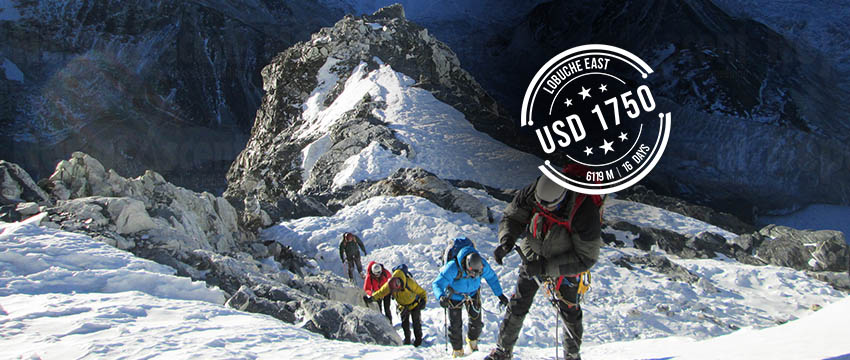
Today is our cherished day for the summit. We start early in the morning for the summit endeavour. Lobuche east offers more panoramic views of the mountains that other popular peaks such as Island Peak. Once upon the Lobuche summit, you would enjoy magnificently panoramic views of Everest, Lhotse, Nuptse, Ama Dablam, Cholatse, Pumori, and many more. We spend some time at the summit celebrating and taking pictures, then we get back to the High Camp again. After we get to highcampp we slowly start to pack up our stuffs and make our way to Pheriche.
DAY 13: Pheriche – Pangboche – Tengboche – Namche Bazzar (3,440 m) 6 hours
Today is much easier walk down to the lower altitudes. Following the same route back to the terminal moraines at Dughla and the wide valley of Khumbu Khola, we pass through the beautiful Sherpa village of Pangboche we retrace our footsteps down to the Imja Khola and up through the forest to Debuche or if interested, we might pay our visit to nuns at the Debuche monastery. If we are trekking during the full moon of November or December, we might get and opportunity to witness the Mani Rimdu festival in the monastery at Tengboche. Upon having lunch at Tengboche, we continuing through the hillside blanketed by rhododendron and juniper trees. If it is spring, the surroundings will be found adored by pink and red rhododendron flowers is dazzling. We either have our lunch in Pangboche or wait until we reach Phunki Tenga. After crossing the prayer flag festooned bridge over the Dudh Koshi River, trail then follows the Dudh Koshi gorge descending rapidly through the pine forests. The path eventually reaches Sansa. We keep a lookout for wild life such as mountain goats, snow leopards, colorful pheasants, etc., while passing through the forest. After passing a Chorten, we reach the army camp at of Namche Bazaar. We would likt to take a long last look (and picture!) back to Lhotse, the tip of Everest and Tengboche from this juncture. Upon reaching at our lodge, we take a nice hot shower and have very relaxed sleep in our room in Namche Bazaar. Overnight in Namche Bazaar.
DAY 14: Namche Bazaar-Lukla 2856M, 8 Hours
The trail descends steeply downward so we need to walk slowly and under control as our shaky legs continuously battle the rocky terrain. After crossing the suspension bridges over the fast flowing Dudh Koshi and its tributaries the trail becomes more level and natural. By today we start to get warmed up by the light breeze. Any remaining sore throats and colds will be gone by today as we pass through this charming mountain air. Although we are travelling the same route down, we feel completely different views. We snap a mixture of open plains, rhododendron and pine forests, and in the distance snow covered peaks. We walk through the Sherpa villages’ noticing impressive faith in Buddhism and culture of prayer stones and prayers flag while we walk through the villages.we stretch those sore legs and recall the experiences of the last couple of weeks. We experience the culmination of a fantastic trek on a happy note with everyone back safe and sound with smile on faces!
DAY 15: Fly Back to Kathmandu
Today, we fly back to Kathmandu. Once you are in Kathmandu your guide will help you check in to your hotel. Once checked in you have all afternoon free to yourself to explore more of the cities / have rest / body massage enjoy spa etc. After all you deserve to have all of them. If you are still keen on exploring any other areas in Kathmandu,you can talk to your guide and he/she will organize it for you accordingly.
DAY 16: Final Departure
The journey within the mountains of Nepal comes to an end today. Depending on your flight schedules you can wander around Thamel and relax before your flight. Your guide will see you off to the airport for your flight back home. You should be leaving the hotel 3 hours prior to your flight time.
NOTE:
You can also buy the trekking equipments in Kathmandu.The price is better here and you will have time to buy them before the trek.
PERSONAL EQUIPMENTS FOR TREKKING
MOUNTAINEERING EQUIPMENT ONLY FOR THE CLIMBING GROUP
Important Note :
Your safety is of paramount concern while traveling with Sherpa Backpackers. Please note that your leader has the authority to amend or cancel any part of the itinerary if it is deemed necessary due to safety concerns. Every effort will be made to keep to the above itinerary; however, since this adventure entails travelling in remote mountainous regions, we cannot guarantee that we will not deviate from it. Weather conditions, health condition of a group member, unexpected natural disasters, etc., can all contribute to changes in the itinerary. The leader will try to ensure that the trip runs according to plan, but please be prepared to be flexible if required.
The Climbing Group
For the Climbing trip, there will be one climbing and trekking leader, assistant leader (4 trekkers: 1 assistant guide), Sherpa porters for luggage carrying (2 trekkers: 1 porter) and other helpers as per requirement in climbing section. This arrangement ensures that should anybody in the group is sick, the trip can still go ahead as planned. We can run the Island Peak Climbing trip for at least a group of two, and include maximum of twelve people only, as we’ve found this to be the optimum size for a successful trip. However, if you’d like to make a group booking for more than twelve people together, we can arrange this too.
Travel Insurance
It is a condition upon joining any of Sherpa Backpackers trips that all clients be insured for comprehensive expenses that might incur due to medical issues or accidents (this includes air ambulance, helicopter rescue, and treatment costs). Please note that we don’t arrange or sell insurance.
Accommodations
Accommodations are included in the trip cost and Sherpa Backpackers has chosen the best deluxe accommodation for 3 nights in Kathmandu, and trekking nights in standard teahouse/lodge, and two/three nights in two-men camping tent, however teahouses/lodges in most of the places only have shared washing and toilet facilities. To sleep in tent, 4 season sleeping bag and foam mattress will be provided. We maintain standard comfort in every matter based on the enforceable conditions such as weather calamities. In climbing section, toilet facilities will be provided with necessary natural preservation. If you are a solo traveler, you will share a room/tent with someone else of same sex of your group. If you prefer a single room, you may indicate your preference and get single rooms on request by paying single supplement USD 30. However, we like you to understand the fact that there are several places that do not allow single room accommodation. On paying single supplement, you will get single room in Kathmandu but sometimes it is feasible only up to Namche Bazzar only during the trek. Above Namche Bazzar single accommodation is not always feasible. However, we will try our best to provide you with single rooms in all places as much as possible.
Meals
During your climbing trip, you can enjoy typical Nepali food, different ethnic cuisines as well as all types of international cuisine (Tibetan, Continental, Italian, Indian, etc.) from pizza and Chips to apple pie. You can even enjoy hot chocolates, variety of breads, variety of drinks, and snacks. Breakfast of a day will be provided from the teahouse/lodge menu where you spent your night. Lunch will be served on the way to destination, dinner and breakfast in the teahouse/lodge where you will spend the night. During climbing session, a freshly cooked hygienic food or a packed food (as per condition) will be provided. A welcome dinner, a farewell dinner and breakfasts will be provided during your stay in Kathmandu.
Trekking & Climbing Day
Since you will be in the remote countryside area, you will be experiencing the ‘early to bed and early to rise’ schedule. A typical trekking day starts at around 6 or 7 am. Enjoy the hearty breakfast and begin trekking. Carry your pack containing personal items you need for the day. The porters and yaks carry all the loads. Walk at your own pace, enjoy the scenery, chat with the natives, and take photographs. The lunch time depends upon the terrain and is prepared by our catering team. Generally you stop for lunch after about 3 hours of walking. The lunch hour also helps in acclimatization. The aim would be to reach next stop by the sunset. After reaching the overnight stay point, the crew members fix the tents. You may relax with a cup of tea or coffee or take a pleasure walk around the camp site. The dinner would be ready around 7 PM. Enjoy the dinner while sharing the day’s experience with team members.
On the summit day we have an early start around midnight after a light breakfast.It will be around 8-10 hours climg today.you will be coming back to basecamp for the overnight stay after summit.
Individual climbing equipment’s list provided by Sherpa backpackers
(All the Gears are UIAA tested)